Workflows are first-class objects.
A Designflow is a saved, runnable, versionable graph — not a chat transcript or a PDF. Theory can be literally embedded in the shape of a workflow.
District-wide instructional coherence is the single hardest thing in public education. You’ve written the curriculum framework, chosen the instructional model, and funded the PD. The gap between what Central Office intends and what happens in every classroom is where equity breaks down and strategic plans die. LearningGarden is how your district’s instructional vision becomes the daily operating environment of every teacher — not as a mandate they resent, but as a toolkit that makes their job easier because it embeds your district’s goals.
The gap between central-office intent and Tuesday-morning practice is where strategic plans die. LearningGarden closes it.
A typical district has
30
schools
Across roughly
400
classrooms
Converging on
1
source of pedagogical truth
For District Leaders
Built for assistant superintendents and curriculum officers who are tired of strategic plans that don’t survive the walk from board adoption to October classrooms.
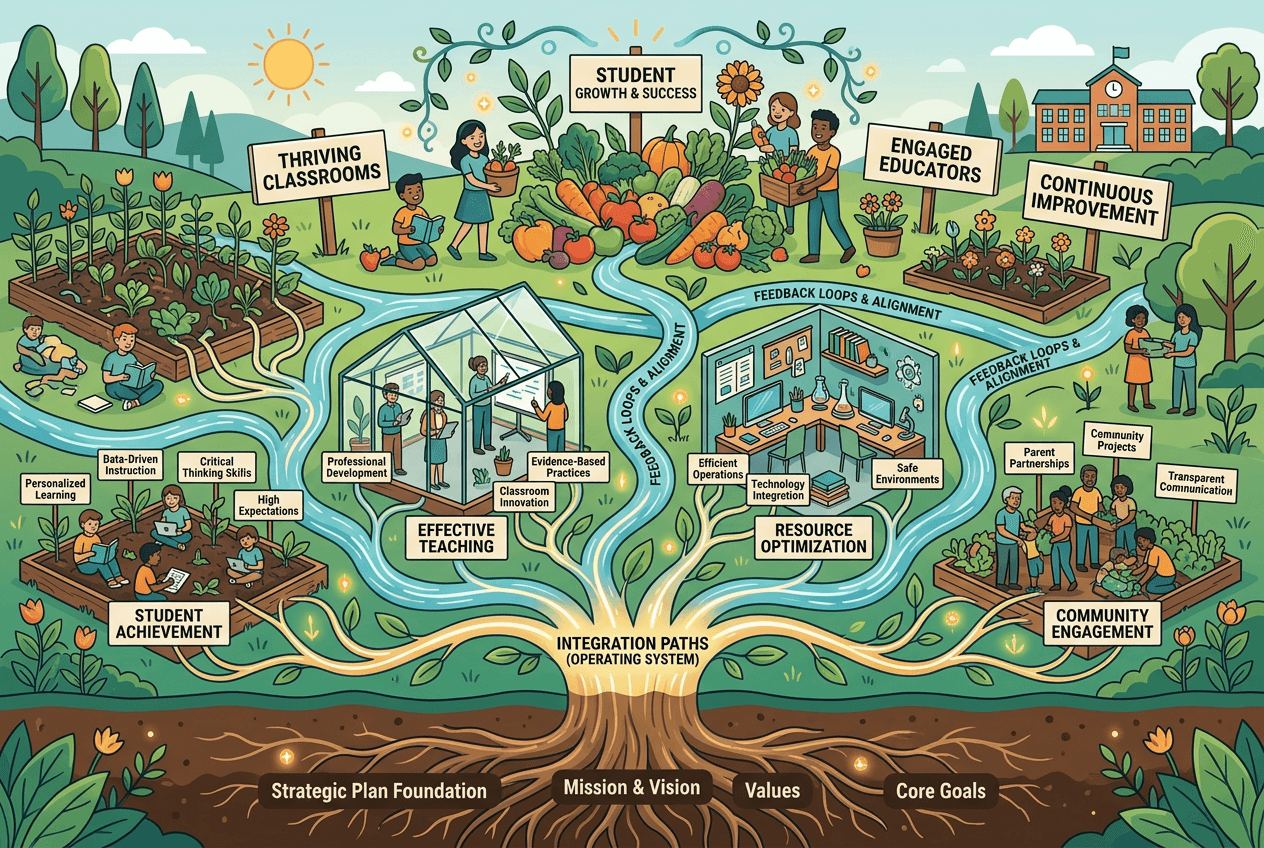
Every goal in your district strategic plan maps to a Garden, its priority practices to Designflows, its exemplars to Actions. The plan exits the binder and enters the browser tab teachers actually have open.
UbD, UDL, CRT, Science of Reading, Visible Learning, inquiry-based learning, restorative practices — whichever your district champions becomes the structure of the workflow itself. Pedagogy transfers through the tool, not through hope.
New adoptions come with runnable Designflows that enforce the curriculum’s instructional model. Implementation becomes measurable in weeks, not discovered via state test results two years later.
Per-Garden, per-school, per-team adoption metrics give the curriculum office weekly visibility into which schools are implementing district priorities and which need coaching reallocation.
Every PD session, coaching cycle, and new-teacher induction publishes to a permanent, versioned, adoption-tracked Garden. District PD stops evaporating. It accumulates.
Years of teacher-generated artifacts become a searchable, versioned, vendor-independent instructional asset of the district itself — protected by PII detection, governed by your security policies, and securely hosted.
Adoption data, iteration history, and usage patterns turn strategic plan execution into a data-rich improvement science practice — not an annual reflection exercise. PDSA cycles get telemetry. Research-practice partnerships get a living laboratory.
Seven strategic uses
Seven concrete plays for the district office — from framework publication to research-practice partnerships.
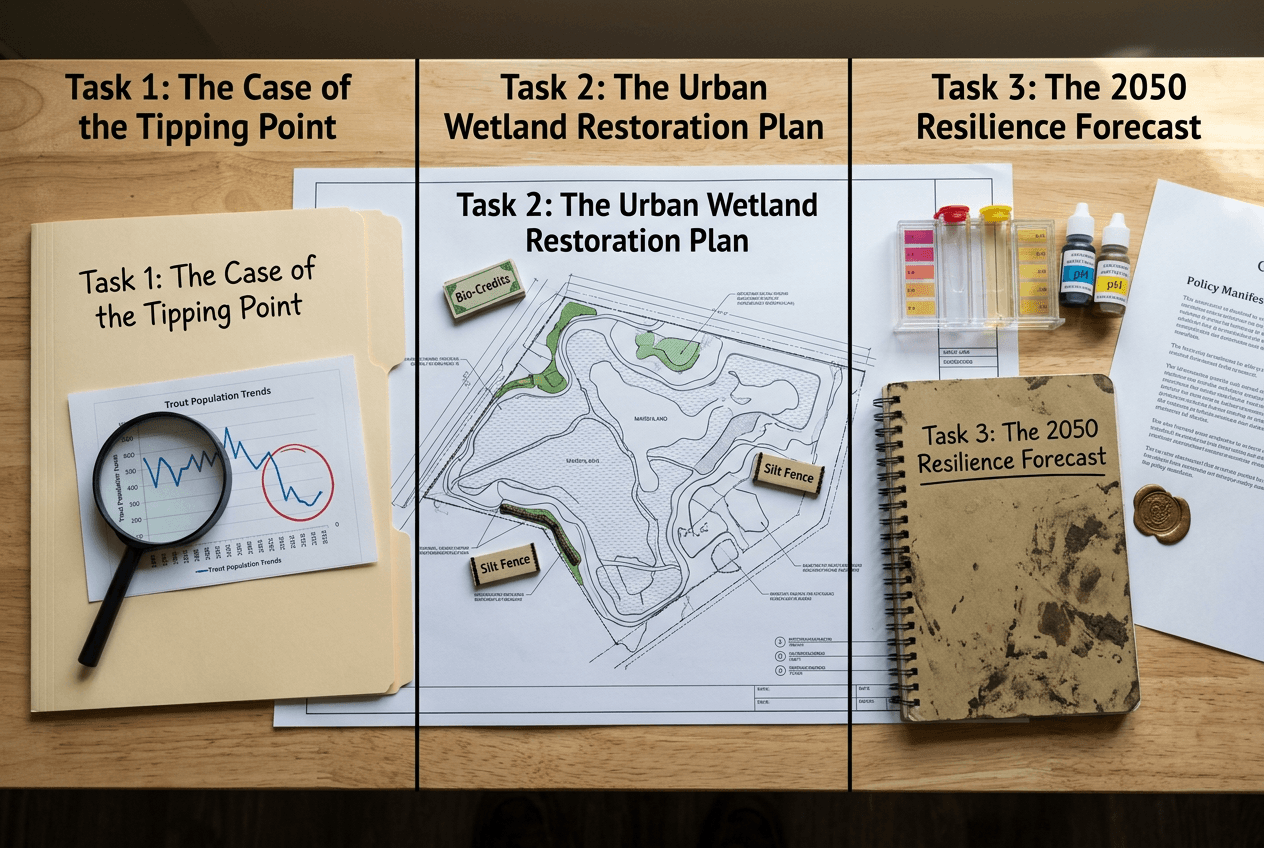
Your framework — Danielson, Marzano, a hybrid grounded in Science of Reading, or your own homegrown model — usually exists as a hiring document, a lounge poster, and a twice-a-year evaluation rubric. Convert it into a District Framework Community where each domain is a Garden and each high-leverage practice is a Designflow that produces a teacher artifact embodying that practice.
Example Designflow
Design a DOK 3+ Task
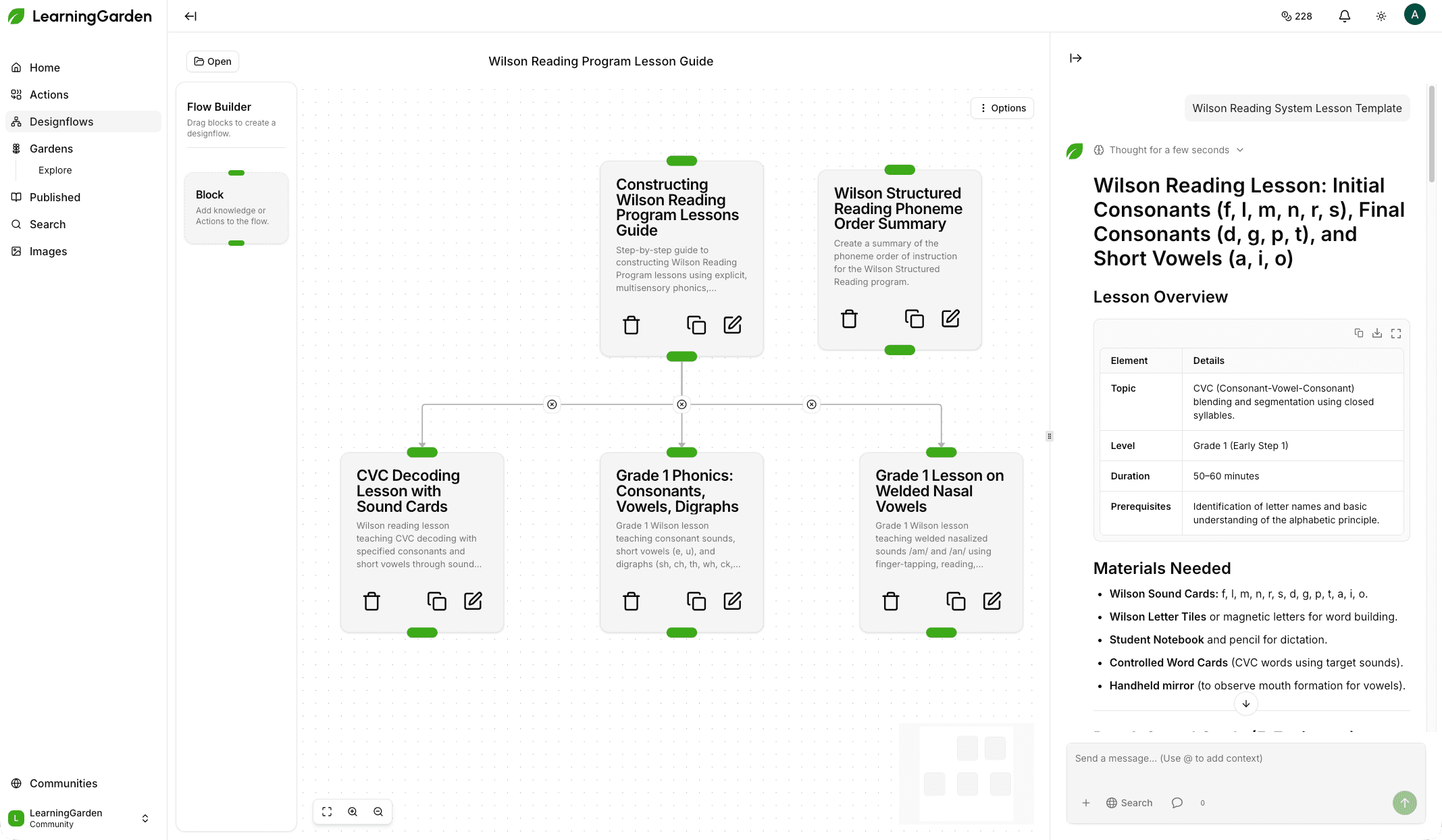
When a district adopts a new K–2 structured-literacy program or a problem-based middle school math curriculum, teachers are asked to change practice on Monday based on a three-day summer institute. Six months in, implementation is patchwork. Publish an Adoption Garden whose Designflows are the curriculum’s instructional model made runnable — and the curriculum office sees implementation slipping in weeks, not in state results.
Example Designflow
Structured Literacy Daily Lesson
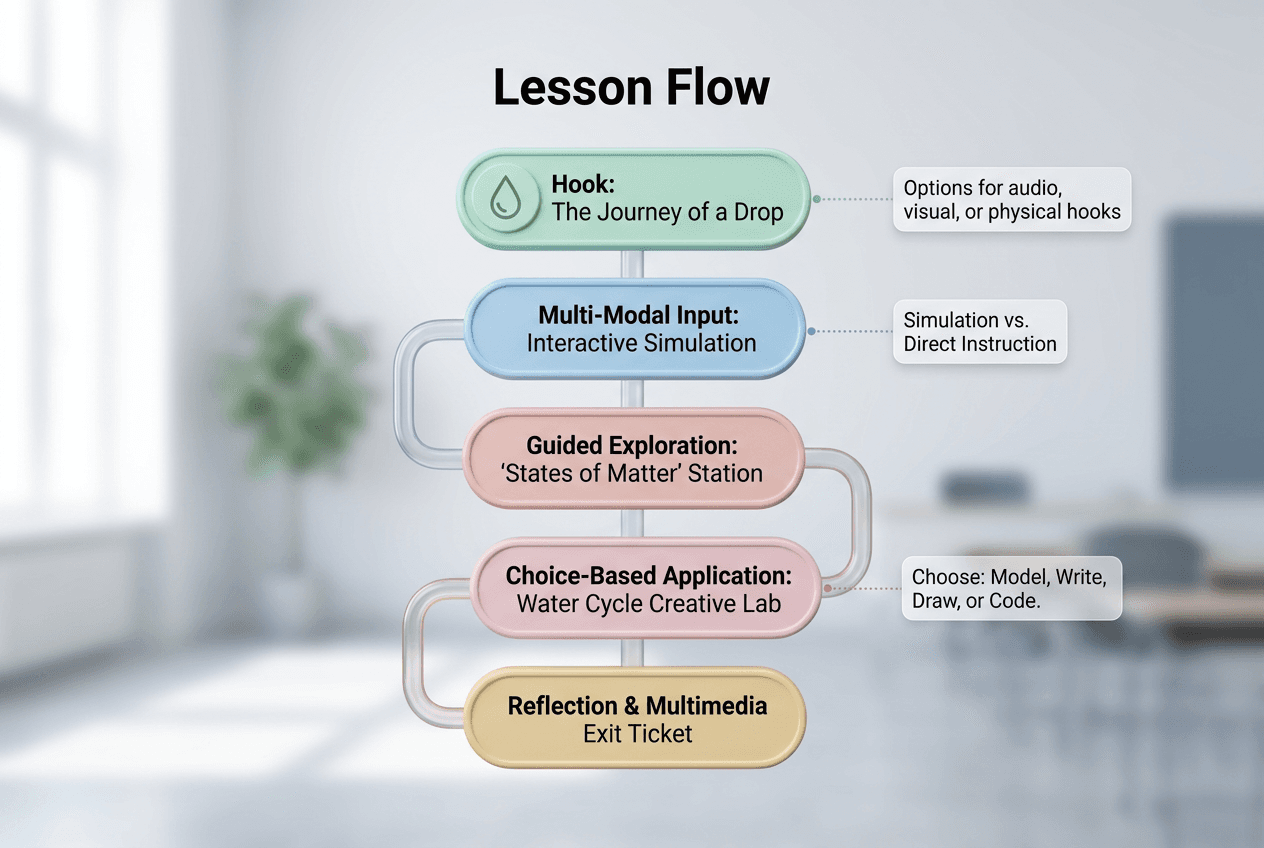
If your district has adopted — or is aspiring to — UDL, SEL integration, inquiry-based learning, restorative practices, or asset-based IEPs, the theory-to-practice problem compounds with every school. Publish framework Designflows from central office once. Train 30 building coaches on the Garden. The Designflows teach the framework every time a teacher uses one.
Example Designflow
UDL Lesson Redesign
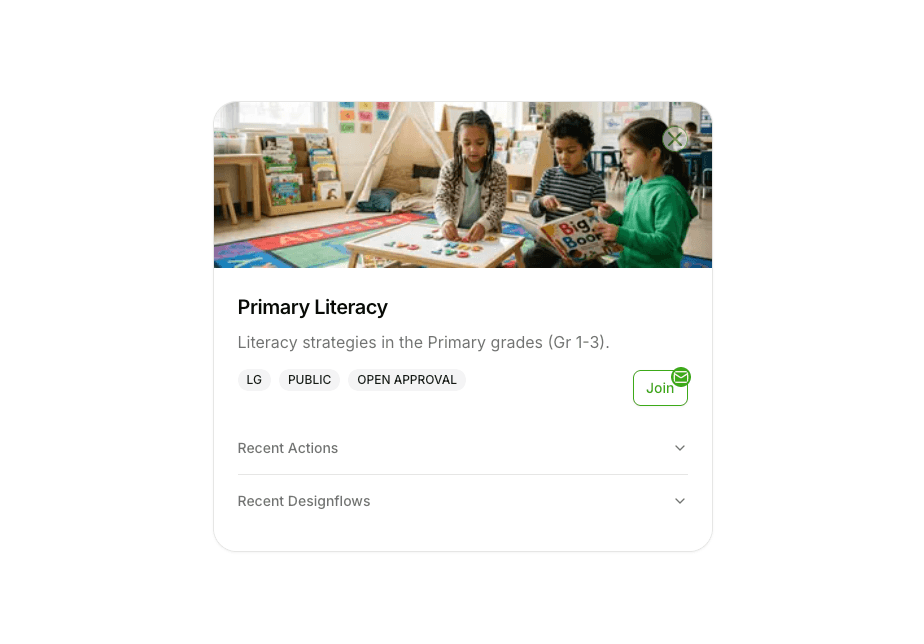
Each strategic plan goal — primary literacy across content areas, closing the achievement gap for multilingual learners, scaling Tier 2 MTSS — becomes a District Initiative Garden with goal-aligned Designflows. Strategic plans stop being aspirational and become operational programs with weekly telemetry.
Example Designflow
Primary Literacy Across Content Areas

Centralize PD design in LearningGarden. Every district-run PD — summer institute, in-service day, instructional coaching cycle, new-teacher induction — produces a published resource set in a dedicated PD Garden. New hires in November get the same artifacts as the August cohort. Designflows iterate with usage data. Innovation stops being trapped at the building level.
Example Designflow
New-Teacher Induction Cohort
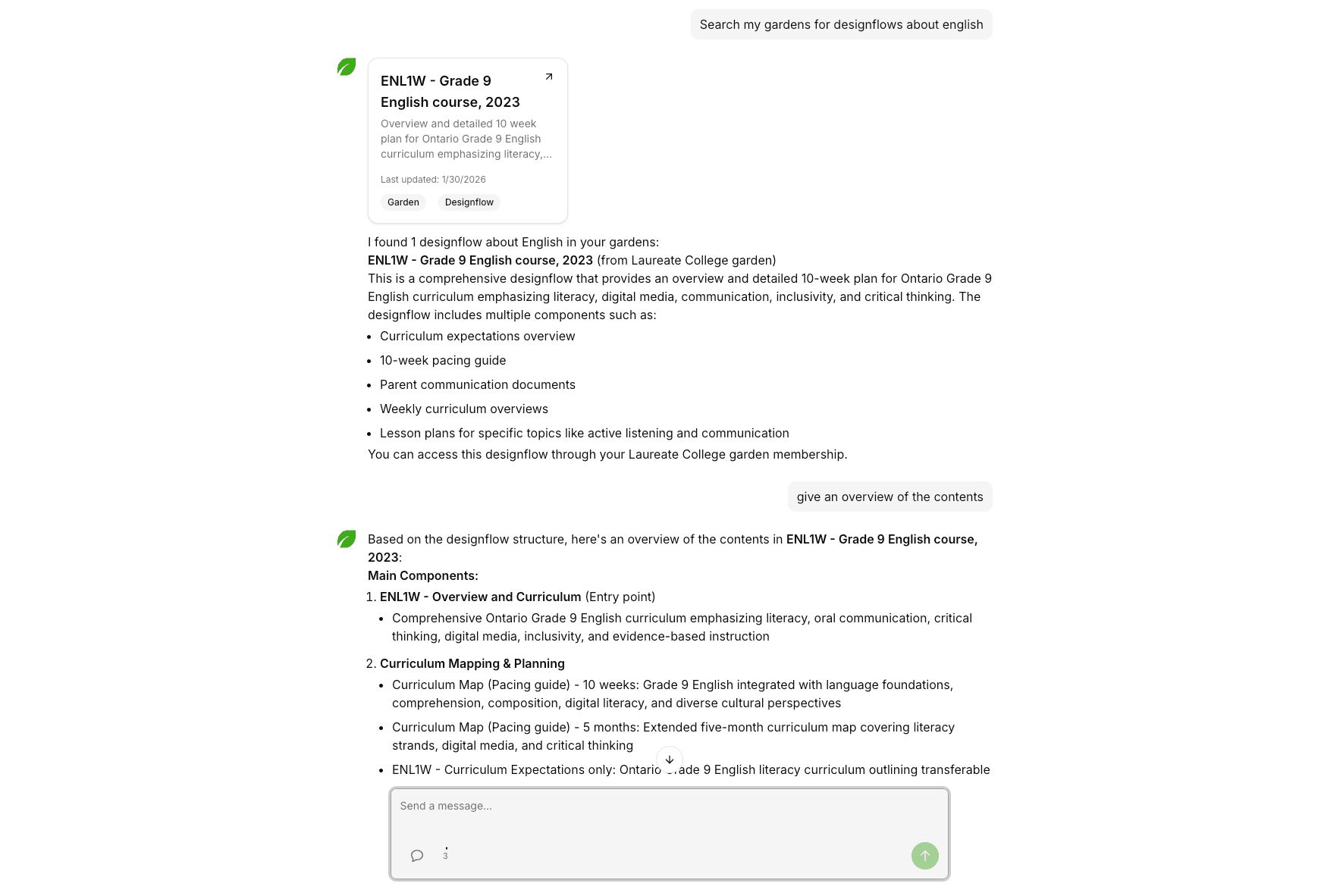
Over a year, your district produces tens of thousands of teacher artifacts — lesson plans, rubrics, unit frameworks, parent communications, IEP drafting supports, common assessments, interventions. In most districts, 99% of this is created once, used once, and lost. In LearningGarden, every published Action and Designflow becomes a permanent, searchable, versioned asset of the district itself — protected by PII detection and governed by your access controls.
Example Designflow
Semantic Search Across Years
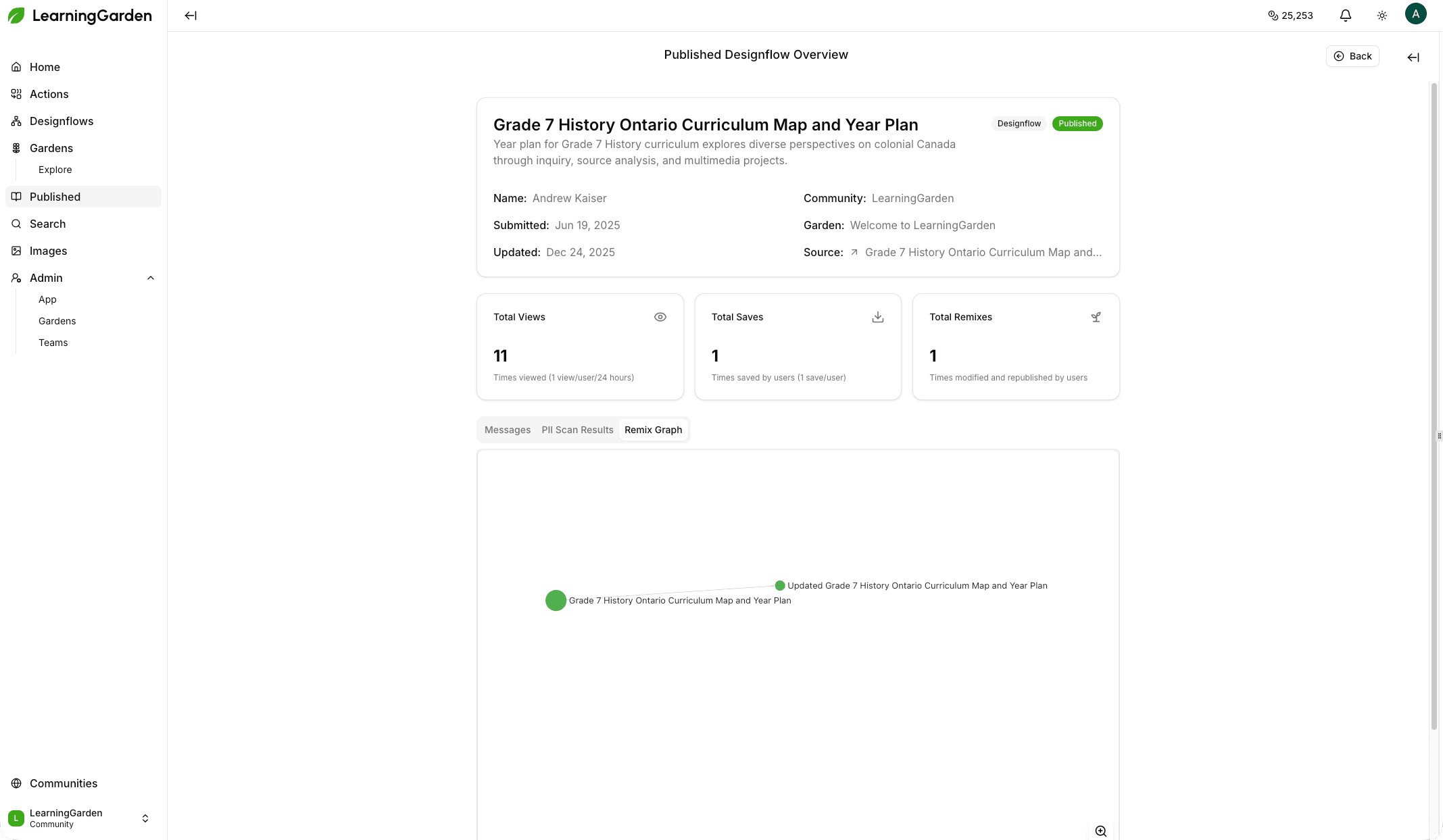
For districts with research-practice partnerships, PDSA cycles, or improvement-science commitments, LearningGarden is a living laboratory. Every Designflow’s adoption, iteration history, and usage counts are data. Partner researchers can — with appropriate permissions — study which pedagogical moves propagate, which stall, and what implementation conditions predict success. Your improvement cycles stop being retrospective.
Example Designflow
PDSA Cycle Telemetry
Every strategic function in the district office maps to a Garden, its priority practices to Designflows, and its impact to a measurable result you can report on weekly.
Function
District instructional framework
Implementation
Framework Community with per-domain Gardens; high-leverage practices as Designflows.
Measurable result
% of teachers running framework-aligned Designflows per month, per school.
Function
Pedagogical framework scaling
Implementation
Framework Garden where Designflows embed UbD, UDL, CRT, SoR, or Visible Learning into the workflow itself.
Measurable result
Framework adoption measured by Designflow usage; theory transfers without retraining.
Function
Equity & culturally responsive practice
Implementation
Equity Garden; asset-based Designflows embedded across subject-area Gardens.
Measurable result
Equity practices surface as structural workflow elements, not as compliance training.
Function
Curriculum adoption
Implementation
Adoption Garden with curriculum-model Designflows; enforces instructional sequence.
Measurable result
Fidelity-of-implementation metrics visible in weeks, not via year-end state data.
Function
Strategic plan growth goals
Implementation
Per-goal Initiative Gardens with goal-aligned Designflow libraries and credit allocation.
Measurable result
Per-school goal-implementation metrics; resource reallocation driven by data.
Function
MTSS / Tier 2 & 3 implementation
Implementation
MTSS Garden; intervention-planning Designflows per tier and domain.
Measurable result
Intervention design fidelity measured at the building and district level.
Function
District PD program
Implementation
PD Garden; every session produces published Designflows; adoption tracked.
Measurable result
PD "stickiness" measured by post-session Designflow usage over weeks and months.
Function
New-teacher induction
Implementation
Induction Garden with standardized first-year Designflows.
Measurable result
Day-one readiness metrics; reduced first-year attrition correlated with artifact usage.
Function
Coaching cycles across schools
Implementation
Coach-moderated Gardens; coaching conversations produce Actions and Designflows.
Measurable result
Coach impact visible in cross-school artifact adoption.
Function
Multilingual learner supports
Implementation
ML Garden; scaffolding Designflows; parent-communication Actions in home languages.
Measurable result
ML-responsive practices become default workflows for content teachers.
Function
Special education and IEPs
Implementation
Spec Ed Garden; IEP-drafting Designflows with PII detection on every publish.
Measurable result
Improved IEP quality with a full PII safeguard trail.
Function
Research-practice partnership
Implementation
Adoption data and iteration history available for IRB-approved study.
Measurable result
Instrumented continuous improvement; publishable research artifacts.
Function
District knowledge management
Implementation
Semantic search across all published resources, across years.
Measurable result
Permanent, versioned, searchable district instructional asset base.
Function
Board and community reporting
Implementation
Dashboard-ready usage, adoption, and budget telemetry per initiative.
Measurable result
Evidence-based strategic plan reporting to your board and stakeholders.
LearningGarden can legitimately claim to operationalize theory, scale PD, and drive strategic plan execution because of four properties that almost no other EdTech tool combines.
A Designflow is a saved, runnable, versionable graph — not a chat transcript or a PDF. Theory can be literally embedded in the shape of a workflow.
Grade teams, departments, schools, districts, and associations each get a Garden. Governance mirrors hierarchy instead of fighting it.
PII detection, moderator review, and versioning mean that “district-endorsed” is a real designation backed by infrastructure — not a rubber stamp.
View, download, and generation counts on every published resource turn implementation into a data question for the first time — not a narrative one.
Combine the four
You get what districts have been trying to build with LMSes, curriculum mapping tools, PD platforms, and SharePoint drives for twenty years — and failing. You get an instructional operating system that embodies your pedagogy and tells you whether it’s being lived out.
Quick answers about stack fit, IT and privacy, data ownership, and multi-school rollout.
For district leaders
Map your goals to Initiative Gardens, ship pedagogical frameworks as Designflows, and walk into next month’s leadership meeting with adoption telemetry.